











Entreq Ground Boxes, Grounding Kits & Ground Cables
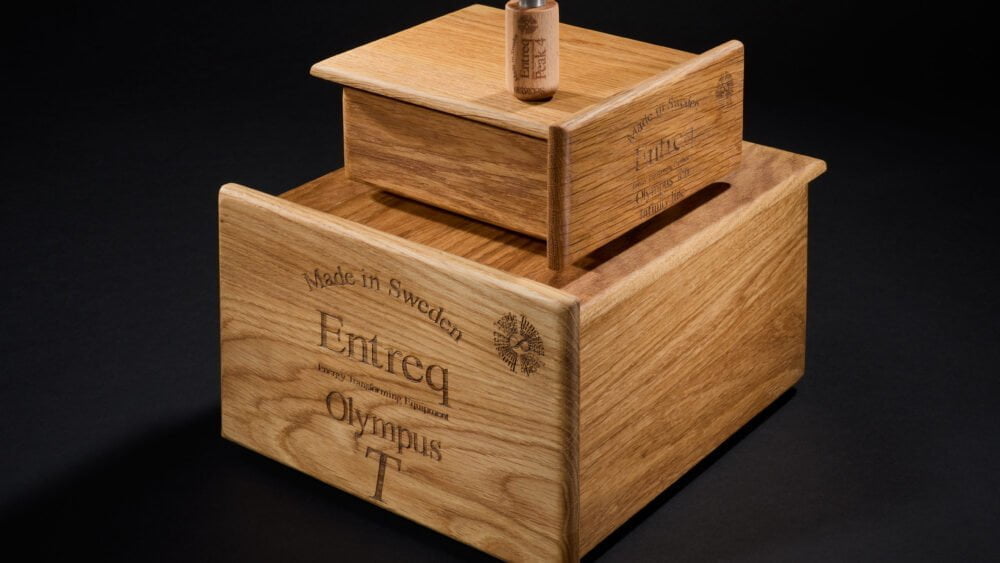
Entreq Ground Boxes
Entreq Ground Boxes are perhaps the most fundamental part of their philosophy, it is certainly what they are most well known for as their Ground Boxes are visually quite distinctive.
I would argue that it is what they are most well known for as their ground boxes are quite distinctive.
When employed correctly in a system an Entreq Ground Box can have a profound impact on the musical performance of that system. They effectively act as a drain to remove noise and pollutants present in the audio signal and store this unwanted energy in the ground box, away from the system and the delicate musical signal.
What Entreq Ground Boxes Actually Do
Entreq ground boxes do not replace the safety ground, nor do they attempt to improve mains power quality directly.
Their purpose is different: they provide an alternative, lower-impedance pathway for high-frequency noise that would otherwise remain within the signal circuitry of your equipment.
Every electronic device generates unwanted radio-frequency (RF) and electromagnetic interference (EMI). Much of this noise accumulates in the signal-ground reference (the point against which all audio voltages are measured). When this reference carries high-frequency contamination, it introduces instability and masks fine detail, reducing the system’s ability to resolve low-level information.
This noise is caused by a number of factors in the modern home, computers using switched mode power supplies, routers, mobile phone chargers, fridge freezers, dishwashers, smart lights, the list is extensive.
Go around your home and count just how many devices you have permanently powered on; they all have a detrimental effect on system performance. Also the actual components in a hi-fi system also create noise themselves.
This noise gets passed around the components in your system via the cables and collectively it masks a systems ability to produce fine detail and effects how a system performs. In reality you won’t be familiar with what is happening in your system until you remove this noise.

Signal Ground vs. Safety Ground
This is one of the most commonly misunderstood aspects of Entreq Ground Boxes. I’ve lost count of the number of times a customer has dismissed the idea of adding a Ground Box to his system because “The system is already grounded through the mains.” While this is course true from a safety perspective, this overlooks the distinction between protective earth and the signal-ground reference used by audio circuitry.
The mineral mixture contained within the Ground Boxes is precisely formulated to present a lower high-frequency impedance than the signal circuit itself, this encourages RF energy to flow into the box instead of remaining in the audio circuitry.
Safety Ground (Protective Earth):
- Prevents electric shock
- Provides a low-impedance path for fault currents to trip breakers
- Connected to earth through building wiring
- Shared by all appliances and devices on the circuit
- Often carries high-frequency noise due to shared impedance and multiple return paths
- Optimised for safety at 50/60Hz, not for noise performance
Signal Ground:
- Acts as the voltage reference for audio circuitry
- Carries very small currents under normal operation
- May connect to safety earth inside the equipment, but serves a different functional role
- Intended to provide a stable reference for low-level analogue and digital signals
- Highly sensitive to high-frequency contamination
- Benefits from additional HF drainage paths and controlled impedance environments
Your home’s safety-earth network is electrically noisy because it is shared by all of your household appliances – refrigerators, computers, switch-mode supplies, lighting dimmers and countless other devices. It is designed for safety and fault protection, but not for providing a clean reference at microvolt and millivolt signal levels.
Entreq ground boxes supplement the signal-ground environment by offering an additional, frequency-selective pathway for unwanted high-frequency energy. They do not replace or bypass safety ground. Entreq ground boxes are designed to operate alongside the existing grounding scheme to improve the stability of the signal reference.
Connecting an Entreq Ground Box to your System
Connecting a Ground Box to a system or component couldn’t be simpler. Entreq ground cables are available with various types of connections on them such as RCA, XLR, USB and RJ45. Connect the hook end of the cable to the back of the ground box and other end to an unused socket, like an RCA input on an amplifier, or an RJ45 socket on a router.
The connection to the ground box creates a drain which removes the pollutants present in the signal circuitry dumping them into the ground box.
The sonic improvements this brings is quite often something you will hear instantly, but in many cases it takes a couple of tracks being played before you hear that something is changing, it’s important to stress it is not like a flicking a switch.
One of the first things people notice is an overriding sense of calmness to the music. Things don’t slow down and they don’t roll the detail off, but you get a reduction in coarseness and grain. The dynamics and detail improves and you get better timing, focus and stability as result.
There is an extensive range of ground boxes available, many are designed to connect to a single component, whereas other are designed connected to multiple components at once. There is no ‘best’ ground box, it is typically dictated by how complex a system is and the customers budget.


Recently a good customer of mine said – “the improvement is as much as about what you don’t hear”, this removal of noise allows subtle previously unheard nuances and textures in your music to really jump out.
What can you connect a ground box to?
Integrated Amplifiers, Pre-amplifiers, DAC’s, CD Players, Music Streamers and Server, Routers and other network products like switches.
Don’t underestimate or overlook the benefit of adding an Entreq Ground Box into your system. I have done countless demonstrations for customers who have initially been very sceptical or dismissive over the idea, but I can confidently say that the vast majority of these demonstrations result in someone purchasing a ground box and they have been delighted with the end result.
Entreq Grounding Kits
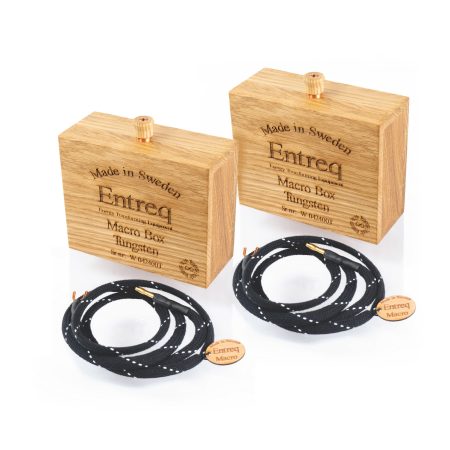
The grounding kits are designed to give people an introduction of what Entreq grounding is all about, they wanted to launch something more affordable that could serve as a pathway into the brand to those with more modest systems, the various kits offer complete grounding solutions at all new price points for Entreq and they are all incredibly capable.
Entreq have launched their second generation of grounding kits in the Summer of 2026 with all new Micro Kits and Macro Kits.
The Micro Kit Tungsten is £260, the Macro Kit Tungsten is £500, the Macro Twin Kit Tungsten is £1000
In each kit you get a ground box and a 1.1m ground cable so you have everything you require in one simple package. You can obviously choose what termination you require for the ground cable for the Micro and Macro Kit (RCA, XLR, USB, RJ45, Spade). The Macro Twin Kit comes with 2 cables that are terminated 4mm Banana to Spade, again these cables are 1.1m long.


Entreq Ground Boxes
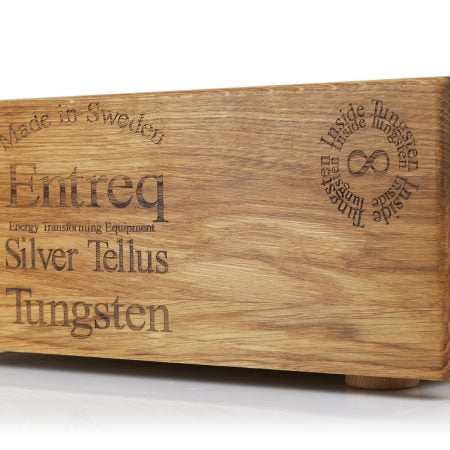
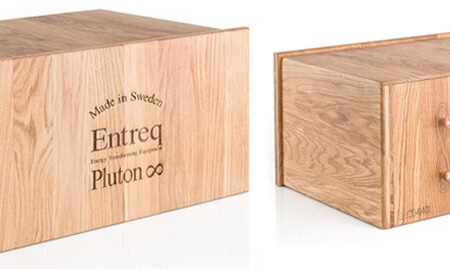
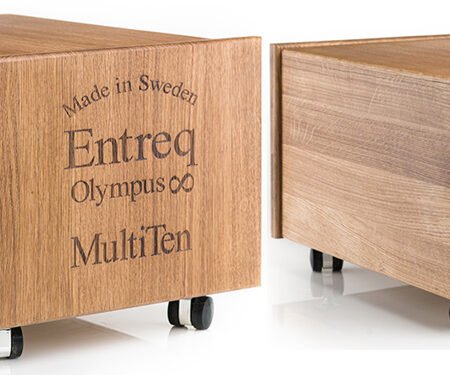
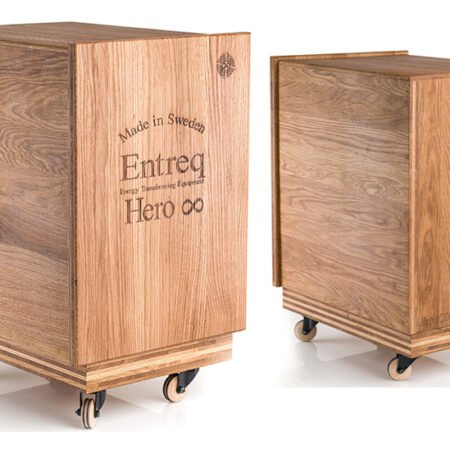
The range of standalone ground boxes starts with the Silver Minimus Tungsten, there are 8 models in the range.
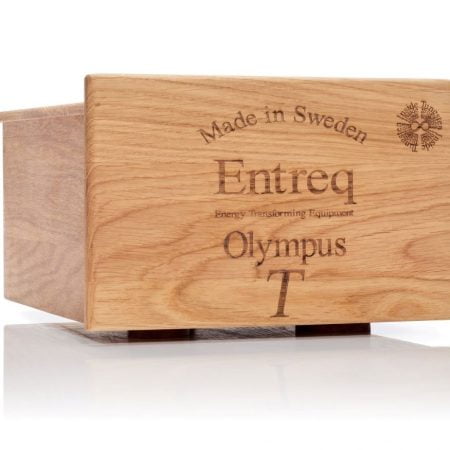
The Silver Minimus Tungsten and Olympus Ten T are the smallest boxes, designed for single component use, the other boxes are all larger and offer connectivity for more than 1 product.
The Olympus Ten T, the Tellus 3 Tungsten, Silver Tellus Tungsten and the Olympus Infinity T are the sweet spots in the range for me. They can offer a profound improvement in the way a system can perform.



Negative Output Grounding
One popular application with Entreq is connecting to the negative loudspeaker terminals on your amplifier.
To do this you require 2 independent ground boxes, such as a Macro Twin Kit Tungsten or 2 x Silver Minimus Tungsten, 2 x Olympus Ten Tungsten or 2 of the 3 posts on a Tellus 3 Tungsten or a Silver Tellus Tungsten
You could also use 2 of the posts on the new Olympus Pluton, Olympus TenTen and Olympus Hero as well along with 2 suitable ground cables.
You simply connect one box to the left negative speaker terminal on your amplifier and the other box to your right negative speaker terminal on your amplifier

I must stress that NOTHING else can share the post you are using other than this one connection from your negative outputs. Damage may occur if you connect another component to the same post, or if you ground your speaker outputs together on the same post.
This is a demonstration which I particularly enjoy as I love watching my customers’ faces as they hear the impact this can have on performance. I recently did this with a Poseidon where the effects were huge and instantly audible, the scale of the system opened up and things become really holographic in presentation.
After leaving this with the customer for a week I returned and simply disconnected them. All of a sudden his system sounded forward, thin and congested. Needless to say an order was forthcoming shortly afterwards!
A few years ago at the Audio Show Deluxe there was a demonstration showing the benefits of negative ouput grounding, using a Macro Twin Kit. I can’t remember the amplifier that was being used, but there must have been a dozen or so people in the room and afterwards there were 2 or 3 people who said to me the upgrade was on par with an amplifier upgrade.
Please note: You cannot ground your amplifiers negative speaker outlets using a single Silver Tellus, an original Tellus or an Olympus Tellus as the grounding posts on these boxes are all common, they are NOT independent like the outlets on the Tellus II, Tellus II Infinity, Tellus 3 Tungsten, Poseidon, Silver Tellus Tungsten or the smaller single post boxes.
If you are using single cell boxes like Minimus, Silver Minimus, Olympus Ten and Olympus Minimus you can only use a PAIR of boxes to do this. You cannot use one box for both connections.
If you are in any doubt over this please ask

Entreq Ground Cables
Entreq have an extensive range of ground cables to compliment their ground boxes. The range consists of 6 cables, starting with the Copper at £100, above that we have Hexa, Revelation, Apollo, Sudoku and the flagship Olympus which is £1500
There is no shortage of termination options available with RCA, XLR (both male and female), RJ45, USB (type A and B) and Spade available, this covers most users needs, other termination options such as BNC or 4mm are available as special order too.
All ground cables come by default hardwired, removable connectors are available as a cost option and these are now special order only.
Hardwired offers better performance and it is what I always recommend.
There is no right of wrong combination or mixture of ground cables, it depends on your budget, how your system performs and importantly what you want out of your system.
Each of the ground cables has their place and are system dependent.
Do not assume the most expensive equals best performance. Each cable can be very effective when used in the correct context I’ve had superb results in big systems using less expensive options. The Copper and Hexa offer great performance when used in a system which can sound forward or overly detailed. The Apollo has consistently been the most popular ground cable and this offers excellent insight and transparency.
The flagship Olympus takes the performance of the Apollo forward by several levels, it’s a genuine showstopper and never fails to impress, the jump from an Apollo at £680 to the Olympus at £1500 is quite a step which is why there is also the Sudoku which is £900 which bridges the price gap really well. In performance terms Sudoku is much closer to the Olympus than the Apollo
I keep an extensive range of all ground cables on demonstration.