










13th August 2026 · Latest News
Shunyata Power Conditioners – A Rough Guide
This blog was originally published in October 2024 and some of the products originally discussed are no longer available and have been updated with new models. This newly revised version of this blog reflects those changes, models and prices are correct as of August 2026
Shunyata Research are an American company, based in Poulsbo, a small town in Washington state in the Pacific North West, they are a short boat trip and drive from Seattle.
Shunyata have an impeccable reputation within the industry, Caelin Gabriel their founder, owner and chief designer spend a lot of years working for the US Military designing complex noise reductions systems. Caelin also just so happened to be an audiophile and when military life ended his unique set of skills could be applied to the audio world to help remove noise and improve system performance and in 1998 Shunyata Research was created.
Shunyata had been on my radar for a little while when in 2019 a mutual friend in the industry suggested that I should have a conversation with Guillaume Boyer, the owner of Boyer Audio who is the importer of Shunyata Research within in the UK.

A selection of key products were sent to me to evaluate and after some time in my demonstration room and showing them around a few customers it was obvious that they were something very special. I hit the grounding running and several years later it feels like I have barely come up for air.
Shunyata design and manufacture a wide range of products, including loudspeaker cables, analogue and digital cables, plus a fantastic grounding solution to use with their power conditioners. But, they are undoubtedly most well known for their power cables and conditioners.
Addressing power is the primary foundation for improving the performance of any system. The mains power that enters our home is noisy as is many of the devices which we have plugged in at home, kitchen appliances, routers, chargers and countless wi-fi devices.
The components that make up our systems also produce noise, for example amplifiers that pull current in pulses reflect noise back into the mains which can navigate its way through into other components in the system. You obviously cannot hear this noise directly, but if you can remove it you will hear the impact it makes on the performance of your system.

Shunyata lower noise and improve performance via the implementation of several proprietary and patented technologies, I’ve highlighted a selection of the key elements below, there is more much information on these technologies and more on Shunyata’s website
TAPc (Transverse Axial Polarizer) is a patent-pending technology that couples to the electromagnetic fields surrounding electrical or signal conductors. TAPc behaves like a polarizer, passively reducing electromagnetic distortion that presents as a type of glare or compression on sound or images.
QR/BB – This is a patented device found in the Delta X, Typhon T2, Typhon T30 and Evewrest X. QR/BB is a module which enhances the perception of dynamic impact and timing when connected to amplifiers or other high-current electronics. The QR/BB™ is unique in that it provides a local reserve of energy, or charge, that mitigates the inductive reactance of the AC power line without using coils, transformers or capacitors. The QR/BB™ acts as an instantaneous energy reserve when placed in-line with an AC power supply. — Patent Number: US 10,031,536 —
GPNR (Ground Plane Noise Reduction) is an advanced ground noise filtering system derived from our Altaira ground hubs. GPNR provides continuous ground-plane noise reduction and dramatically lowers the system’s noise floor, preserving clarity, enhancing timing precision, and revealing subtle musical and spatial detail.
Dynamic Transient Current Delivery (DTCD) – this is a proprietary measurement technique which has given Shunyata a unique advantage in the design of conditioners (and power cables) that can maximise the delivery of current to connected components. Measurements indicate that designing in overrated parts using matched metals throughout the electrical path leads to consistent gains in performance, regardless of the system. Overrating and the custom manufacturing of these parts is also directly linked to reliable products with real longevity. As a result, Shunyata invests enormous resources into creating its own components, all made from ultra-pure copper, that exist nowhere else in the industry. This relates directly to CopperConn below.
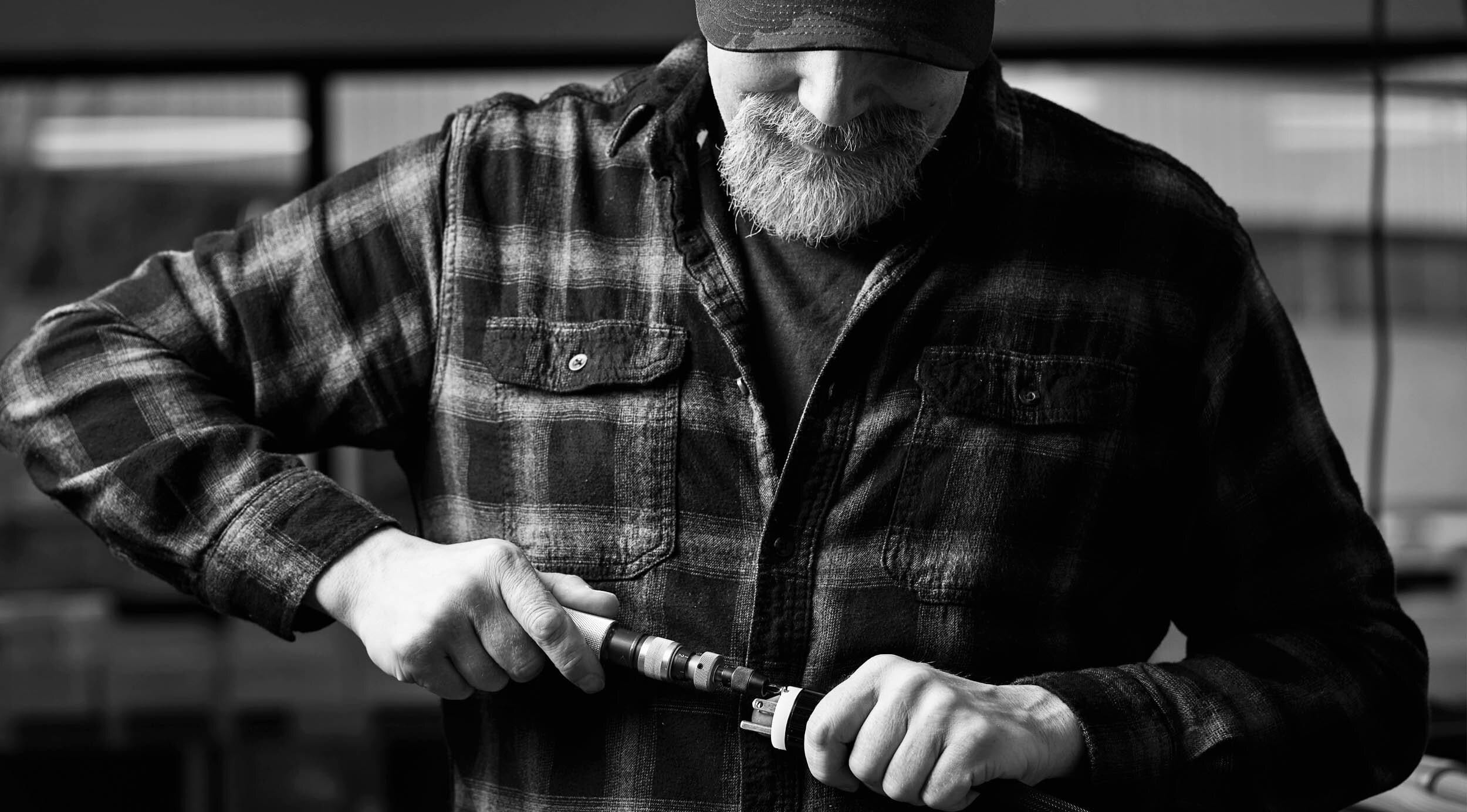
CopperConn – Shunyata’s custom designed and manufactured parts include solid copper outlets, AC connectors, internal wiring, power conductors, buss systems, ground posts and noise isolation chambers. All of these bespoke parts are critical to the performance levels that a Shunyata power conditioner will deliver. All of these components are proprietary and are not found in any other product. Together, the collection of DTCD designed parts form the cornerstone of a broad base of intellectual property. I saw a wide selection of these over-engineered parts on the bench in a recent factory visit and Shunyata go to an almost obsessive level of detail with them and it was hugely impressive to see this first hand.
Component to Component Interference or CCI for short – these are filters which reduce component generated mains noise, this filter is unique in that it also prevents noise from one component leaking backwards and polluting other components, they reduce this noise without the use of transformers, choke, capacitors or coils. Current delivery is not restricted by the use of these filters and they do not compress system dynamics or strangle the music – Shunyata often talk about ‘no hum, no buzz and no heat’ and it is the implementation of CCI which prevents this.
Noise Isolation Chamber (NIC) – this is a patented device which reduces high frequency power line noise. Inside the chamber there is a ferroelectric substance which absorbs high frequency noise and it does so passively without any of the reactive negatives associated with transformers and large capacitors as used in many conventional power conditioners. – Patent US 8,658,892 –
KPIP V2 – This stands for Kinetic Phase Inversion Process, this is another patented technology developed by Caelin to address the issues with burn in time of both cables and components, they have developed a machine is applied to every cable and conditioner they make which dramatically minimises burn in time, I’ve seen this process first hand in the Shunyata factory and it was fascinating to observe it and KPIP V2 was introduced with the launch of Gamma and Theta and it will be rolling out to other products very soon.

Simply put Shunyata power conditioners make everything sound better, their products are designed to be neutral, sonically invisible so they can step out of the way of the sound, they do not change or shape the sound and importantly they do not compress or crush system dynamics. Many well known established ‘mid-fi’ brands who make power products can really strangle the music, some of them certainly can reduce noise, but they come with a caveat – this does not happen with Shunyata, even large amplifiers will dramatically improve when connected to a conditioner.
Each model in the range fundamentally does the same thing – they improve every element of a system, detail, clarity, weight, 3d, note decay, as you move up the range the improvement with each model becomes more obvious and more profound as the technologies employed in each model differ.
The QR/BB module is available on the Delta X, Typhon T2, Typhon T30 and the Everest X for example and the number of zones of isolation increase as you move through the range.
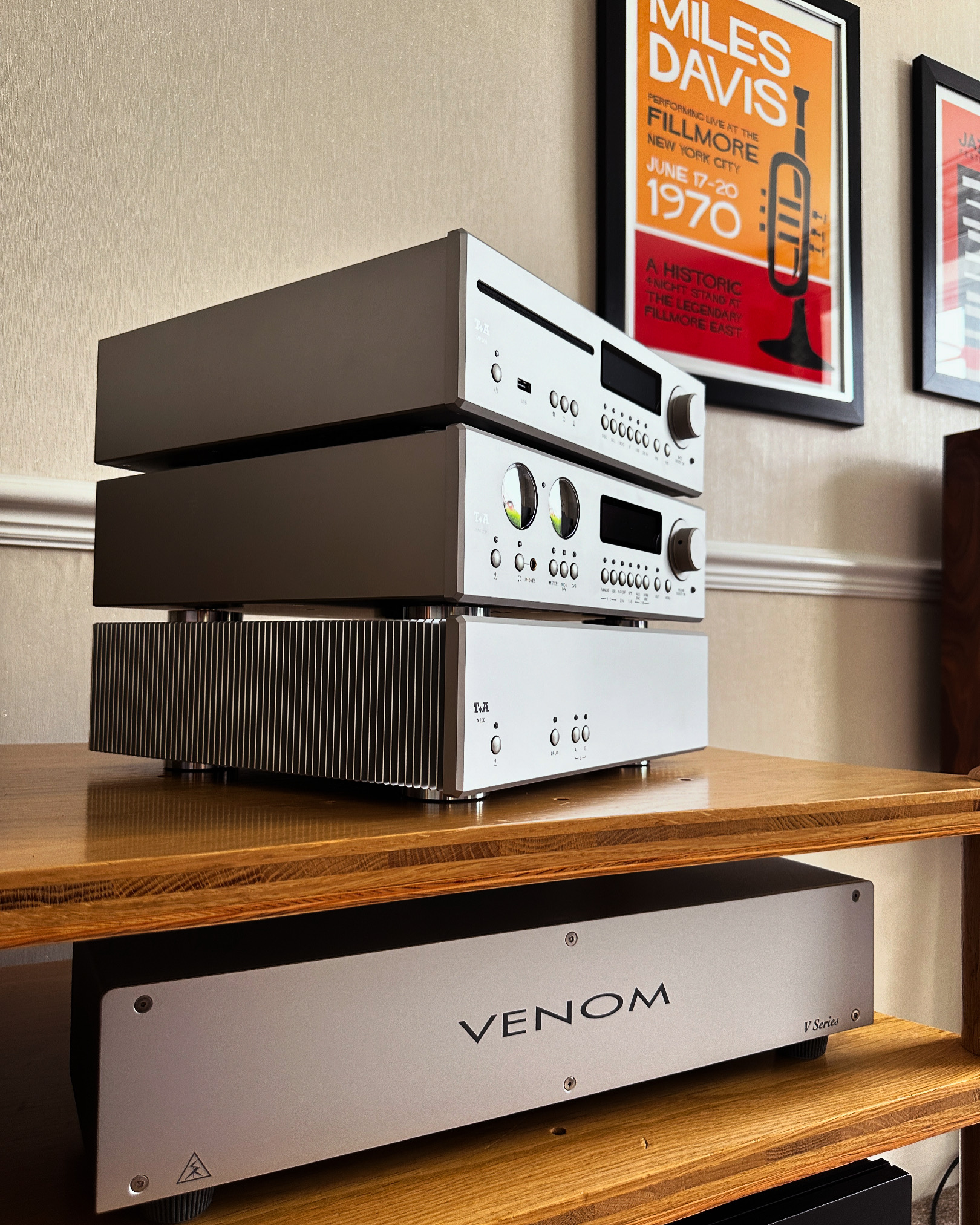
There are 5 power conditioners starting with the Venom V6, this model replaced the Venom UK6. Priced at £2850 the V6 has 6 outlets and all are contained within a single zone of isolation.
As with every current Shunyata power conditioner the V6 has a chassis ground terminal on the rear for those who want to add an Altaira grounding hub (the Altaira will be getting it’s own rough guide in due course)
The entry level Gamma XC Power Cable (£750) is the natural power cable to be used with the V6. As with all Shunyata Power Conditioners the cable you need to feed the V6 requires a C19 IEC connector.
The V6 and the Gamma make for an excellent combination and will improve the performance of any system you connect it to. I’ve had superb results using a Venom V6 with a variety of components at different levels. It works brilliantly with the Soulnote Series 1 and Series 2 components and Metronome’s Digital Sharing Range.
When connected to the V6 you get a greater sense of air and space around the musicians, bass response improves and notes develop more texture.
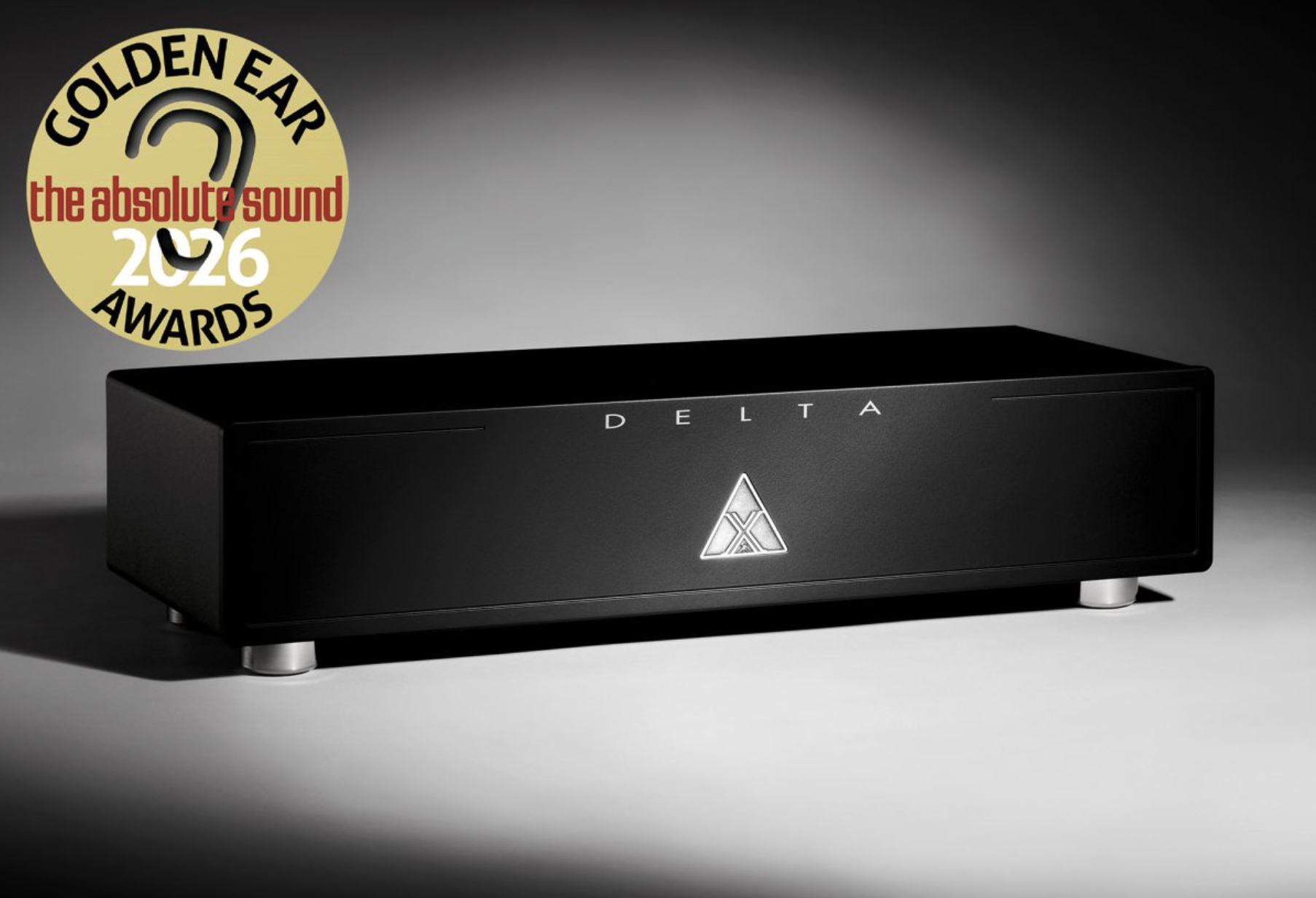
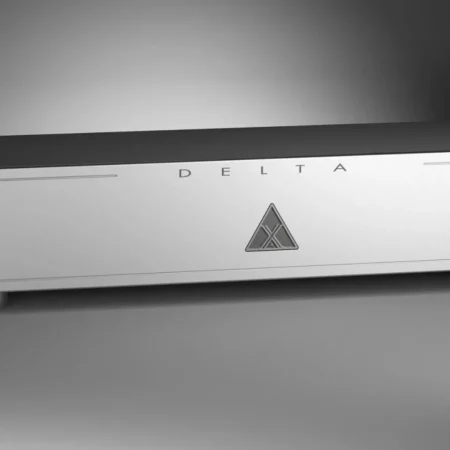
The Delta X is the next model up in the range and is the first model in Shunyata’s ‘Performance’ range, it is replacement for the popular Delta D6 and was released in the Spring of 2026.
The Delta X is £5000 and the performance and technology that Shunyata have incorporated into this model at the price point is incredibly strong, arguably the most aggressive price to performance product they have ever released.
It features the patented QR/BB module and also a patent pending TAPc (Transverse Axial Polarizer), both descended directly from the flagship Everest X.
QR/BB is a patented technology which acts as an instantaneous energy reserve when placed in-line with an AC power supply. It dramatically enhances dynamic impact, timing and scale. The TAPc is a patent-pending technology that couples to the electromagnetic fields surrounding electrical or signal conductors. TAPc behaves like a polariser, passively reducing electromagnetic distortion that presents itself as a type of glare or compression.
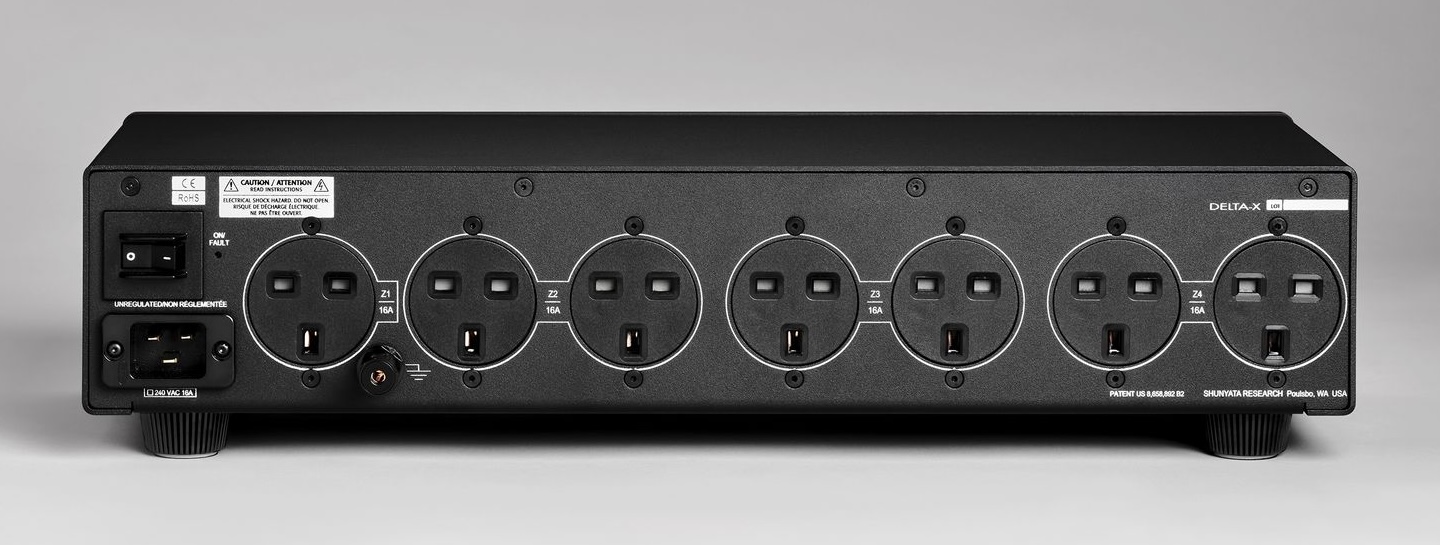
Delta X has 7 outlets on the back and is physically a larger unit than the Venom as a result. The sockets on the Delta X are split into 4 isolated zones, 1 zone is a single socket by itself. There are 3 further zones with 2 sockets per zone. This gives the Delta X a distinct sonic advantage over the V6 as you can keep your amplification and digital devices in separate zones which helps to increase performance.
The Delta X is £5000 plus a power cable to connect it to the wall, you have a few choices with the Delta X, depending on your budget, your system and how far you want to push the performance of the Delta X, it is incredibly scalable with the right power cable.
For those on a budget the Theta XC (£1100) is a great choice to partner with a Delta X, it really allows it to shine. But if you step up to an Alpha X XC (£2850) or a Sigma X (£4000) the Delta X really pulls ahead, both of the cables are obviously more expensive than the Theta XC, but you would think you were listening to a different power conditioner.
Owners of the Denali please take note, the Delta X is superior to it in every way, it is a marked jump in performance with improved dynamics, a quieter background, improved bass weight and articulation. It is an incredibly strong product and when partnered up with the right combination of cables it can really deliver sensational results.
The Typhon T2 is the next model in the range, this model has been a great success story for Shunyata since it’s release, it certainly has kept me very busy.
The Typhon T2 can be described as a power conditioner with 3 outlets on it, it has 2 standard UK sockets plus a 3rd outlet which uses a proprietary amphenol connector. The 2 UK sockets are capable of dealing with very high current loads so we have no issue connecting large power amplifiers or a large integrated amplifier to these sockets.
The 3rd outlet can be used in one of two different ways, with the correct cable it be used to power a 3rd component, or if you already own a Shunyata Power Conditioner (like a Delta D6) you can use this outlet to provide power to your existing conditioner and dramatically improve its performance.
The vast majority of the Typhon T2’s I have installed are being are used as standalone power conditioners, for example a recent system comprised of Vitus RI-101 mk2 Integrated Amplifier connected to the amphenol outlet with a Reference T30 power cable. The 2 standard outlets were used to power a Melco N1 and Metronome Le DAC 2 using Sigma X power cables. Another example was a customer who has a Linn Klimax DSM with a Plinius Pre/Power.

One of the key elements of the Typhon T2 is the patented QR/BB as featured in the Delta X and the Everest X.
The Typhon T2 also has another US patent on it in the form of a ‘Noise Isolation Chamber’ (Patent Number: US 8,658,892), this was created to reduce high frequency noise on the power line. Inside this chamber there is a non-reactive ferroelectric substance that absorbs high frequency noise. This reduces noise without any of the negatives associated with power filter coils, capacitors and transformers.
In performance terms a Typhon T2 offers the same level of performance as an Everest 8000, so it can confidently be used in a serious system to great effect, its rear panel is pictured below.

I get asked about the dedicated output quite frequently and which power cables are suitable – there are several options which vary depending on how it is being used in a system.
To use the Typhon T2 with an existing Shunyata conditioner you require an C19 umbilical, there are 2 available – there is the TT2 C19 Umbilical which is £1500 and the T30 Umbilical which is £2000. Both of these cables are 0.5m long, longer lengths can be ordered.
If you intend to use the amphenol output to power a component, there are 2 options, both of these cable 1.75m long and come by default with a C15 IEC. The TT2 PC is £2000 and the T30 PC is £2500.
There is an alternate version of the Typhon T2 available which is called the Typhon T30, this model is best thought of as a super-charged version of the Typhon T2. Visually from the front it looks identical to the T2 and it has the same 3 outlets on the rear, T30 elevates the performance of the T2 even further.
The mains input on the T30 is the same style twist/lock amphenol connector as featured on the 3rd output, as such T30 is the only Shunyata power conditioner that comes included with a power cable for the wall. The quality and connection method employed here is unrivalled and ensures peak current transfer and the maximum possible performance increase compared to a conventional input.
The T30 is designed primarily for use with large, current hungry amplifiers and it really does excel when used this way.
The Typhon T30 is priced at £10,000 including the dedicated 1.75m T30P input cable.

Well done if you are still with us! There’s no way to discuss a product range like this in less detail unfortunately.
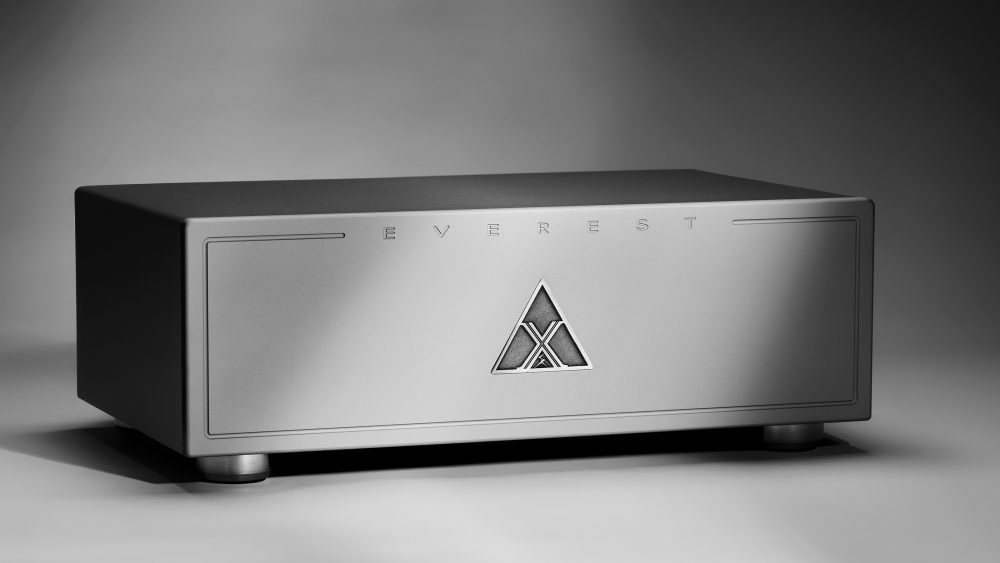
The Everest X is the final model in the range and is the culmination of everything Shunyata have ever learned and accomplished since their inception back in 1997. The Everest 8000 was the previous flagship model and it did very well, it was priced at £10,750 so it wasn’t inexpensive, certainly by the time you had factored in a number of power cables as well.
So, when Shunyata announced the imminent arrival of the Everest X and that would be priced at £15,750 I initially thought they’d made a mistake in the price conversion from US Dollars to UK Pounds.
I received the first demo unit to hit UK shores and I was in the lucky position to have an Everest 8000 here when my Everest X turned up, so I could put them side by side in the demonstration room and draw a few comparisons.
As when any new product is launched the outgoing product doesn’t diminish or performance to a poorer standard, but as is so often the case things do move on. Using an Omega X XC on both the Everest 8000 and the Everest X the difference between the 2 units was stark to the say the least, even with the Everest X being brand new out of the box.
The first thing that struck me was how much quieter it was, with the Everest X in the system I was reaching for the volume control. The background had become eerily quiet, I know inky black backgrounds have become a bit of a hi-fi cliche but that is exactly what happened.
Everything else in the system remained the same, but there was great resolution and precision, but no artifice or feeling of the music being more forward or etched. The soundstage had become more developed in a spatial sense, both from left to right and front to bag. The other element was the bass, it had become much deeper, but it was much more controlled, tuneful and articulate.
We’ve an Everest X on demonstration for about a year now and it is an incredibly strong product – yes it’s not inexpensive and is typically only used in larger systems as a result but it elevates the performance of whatever you connect to it to a completely new level.
As with the other conditioners the Everest X requires an XC C19 power cable to connect it to the wall – with this model the Alpha X XC (£2850) is really the minimum that I would recommend, the Sigma X XC (£4000) does move the Everest X to a new place in performance terms and then you have the Omega X XC (£8000).
Omega X XC a big jump in financial terms and it may put some people off, which I do understand, but an Everest X fed by a Omega X XC is a complete game-changer, a real landmark combination and one which many customers simply haven’t been able to come away from once they’ve experienced it in their system.
The UK version of the Everest offer 7 outlets and 6 zones of isolation, socket 6 and 7 are shared.
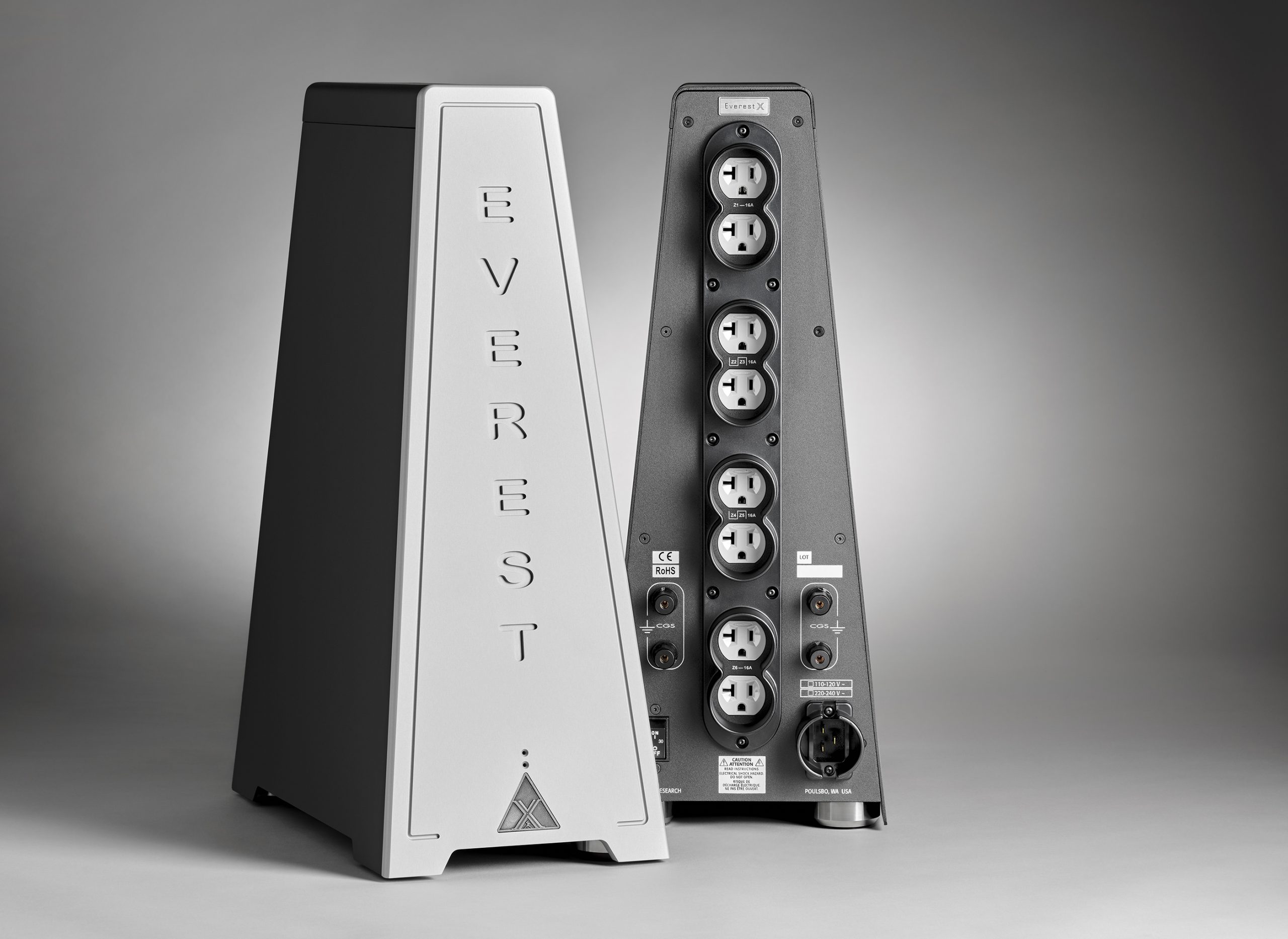
Summing Up
Mains power is the primary foundation for every system and unfortunately it is one of the most overlooked aspects of many systems, it can hold back and restrict a systems ability to convey the music to the best of the systems ability.
Power is subject to large amounts of noise and instability and once this is addressed in a system the impact it can make on system performance can be profound, this is an upgrade that underpins the entire system and can stay in place as and when the system around it gets upgraded.
A bold statement perhaps, but a Shunyata power conditioner improves the performance of any system. Generally speaking the better a system is to begin with the larger the overall impact a conditioner will make, all equipment responds positively – they lower the noise level of a system, which in turn improves clarity, dynamics, depth, sound-stage, textures and layering, they also improve tonality and they simply make the music sound more real and alive.
The amount of customer feedback I’ve received which states that the addition of a power conditioner has been one of the very best upgrades that a customer has ever made to his system is quite substantial to say the least.
Unfortunately too many people ignore the fundamentals of a system yet frequently upgrade their boxes, continuously chasing audio nirvana instead of laying down the correction foundations for their system, which will enable it to perform to a higher standard.